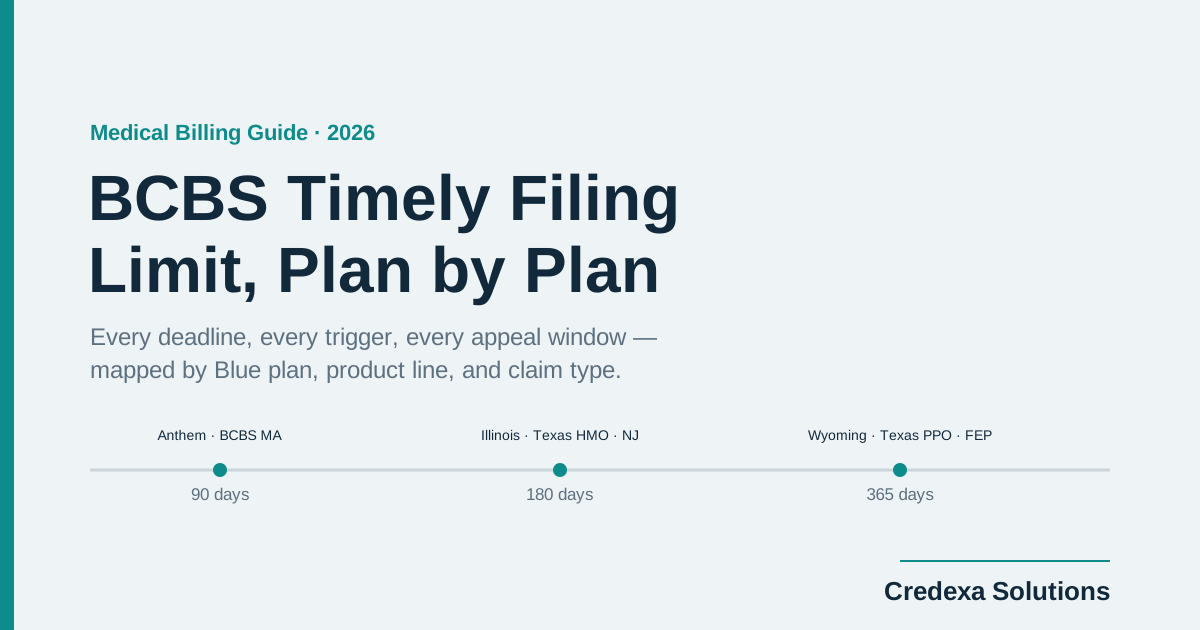
There is no single BCBS timely filing limit. Blue Cross Blue Shield is not one insurance company it’s an association of independently owned, locally operated plans, and every one of them writes its own claim-submission deadline into its own provider manual.
That single structural fact is why so many practices lose clean, billable revenue to CO-29 denials every year. A biller who learns “BCBS gives you 180 days” at one job carries that number into the next job, applies it to Anthem, and watches a perfectly good claim die at day 91.
At Credexa Solutions, we manage revenue cycle operations for healthcare practices billing multiple Blue plans at once, and timely filing is one of the most common and most preventable sources of lost reimbursement we see. This guide breaks down BCBS filing deadlines plan by plan, explains what actually starts the clock, and shows you how to fix a CO-29 denial when the claim was filed on time and the plan simply has no record of it.
Quick Answer: BCBS Timely Filing Windows at a Glance
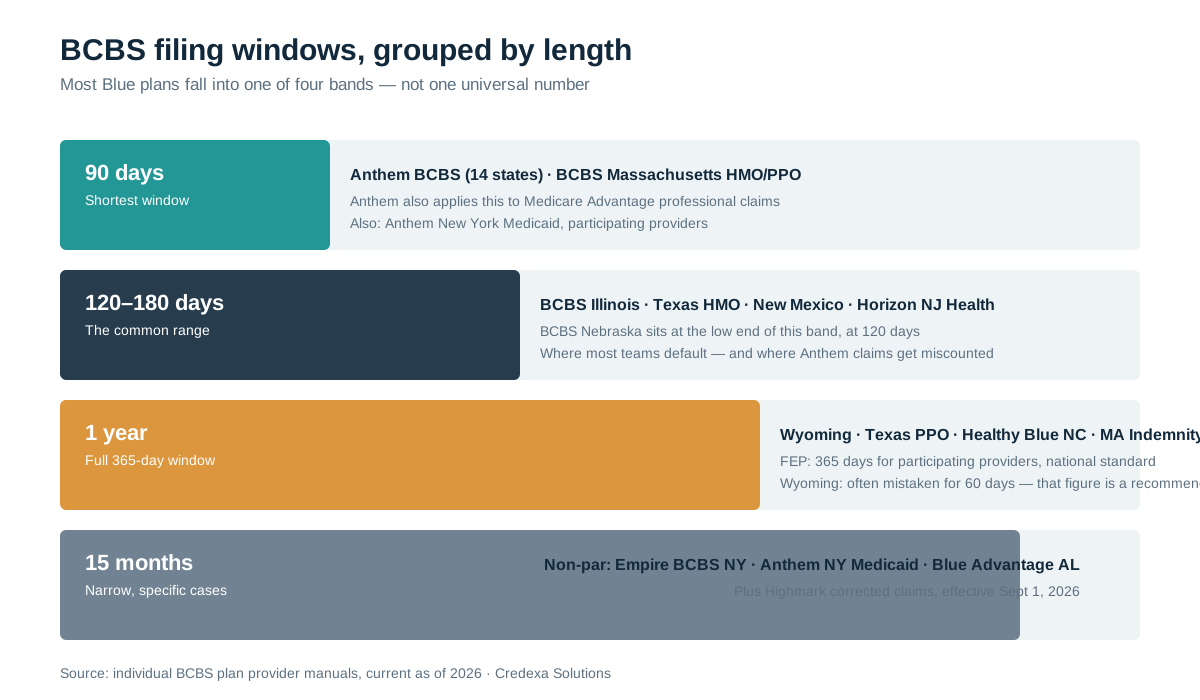
- Shortest deadline: 90 days from date of service Anthem BCBS (14 states) and BCBS Massachusetts HMO/PPO
- Most common deadline: 180 days BCBS Illinois, BCBS Texas HMO, Horizon NJ Health, BCBS New Mexico
- Longest standard deadline: 365 days BCBS Wyoming, BCBS Texas PPO, Healthy Blue North Carolina, BCBS Massachusetts Indemnity
- What overrides every number on this page: your participating provider agreement
If your contract specifies a different window than the plan’s published default, the contract controls. Most Blue plans state this explicitly in their own provider manuals, and it’s worth pulling your executed agreement before you accept any published deadline as final.
Why BCBS Doesn’t Have One Universal Filing Deadline
The Blue Cross Blue Shield Association is a network of independent, community-based licensees rather than a single national carrier. Each licensee BCBS Illinois, Anthem, Highmark, and dozens of others operates under its own provider manual, its own claims systems, and its own filing rules.
Three parent organizations cover most of the plans practices deal with:
- HCSC — operates Blue plans in Illinois, Texas, Oklahoma, New Mexico, and Montana
- Elevance Health — operates Anthem Blue Cross and Blue Shield across 14 states
- Highmark — operates plans in Pennsylvania, West Virginia, Delaware, and western New York
A multi-state practice billing Anthem in one state and BCBS Illinois in another is effectively managing two separate deadline systems under the same logo a 90-day clock in one and a 180-day clock in the other. Treating “BCBS” as a single payer in your billing system is where most of these denials start.
BCBS Timely Filing Limits by Plan (2026 Reference Table)
Use the clock start column before the day count two plans can both publish “180 days” and still mean two different actual deadlines depending on what triggers the count.
| Plan | Initial Filing Window | Clock Typically Starts | Notes |
|---|---|---|---|
| Anthem BCBS (14 states) | 90 days | Date of service | Applies to commercial and Medicare Advantage professional claims |
| BCBS Massachusetts (HMO/PPO) | 90 days | Date of service | Indemnity products get one year instead |
| BCBS Massachusetts (Indemnity) | 1 year | Date of service | — |
| BCBS Texas (HMO/Blue Essentials) | 180 days | Date of service (institutional uses UB-04 “Through” date) | — |
| BCBS Texas (PPO/Blue Choice) | 365 days | Date of service | — |
| BCBS Texas (Medicaid/STAR/CHIP) | 95 days | Date of service | Governed by Texas Insurance Code as well as the plan manual |
| BCBS Illinois (professional PPO/Blue Choice/Blue HPN) | 180 days | Date of service, or discharge date for inpatient | Facility claims run on a separate rule set |
| BCBS Nebraska | 120 days | Date of service or per contract | — |
| Horizon NJ Health | 180 days | Date of service | — |
| Healthy Blue (BCBS North Carolina Medicaid) | 365 days | Discharge date (inpatient) / date of service (outpatient) | — |
| BCBS Wyoming | 1 year | Date of service | The plan encourages 60-day submission but the enforceable deadline is a full year |
| Anthem New York Medicaid | 90 days (participating) / 15 months (non-participating) | Date of service | — |
| BCBS Tennessee (commercial) | 6 months | Date of service (practitioners) / discharge (facilities) | — |
| BCBS Federal Employee Program | 365 days (participating providers) | Date of service | Members and non-participating providers work to a calendar deadline instead |
Where a figure couldn’t be confirmed against a plan’s own published policy, we’d rather tell you to verify it directly than repeat a number circulating elsewhere. Filing limits change, so treat any table including this one as a starting point, not a substitute for checking your current provider manual and contract.
The Two Numbers Everyone Gets Wrong
BCBS Wyoming. Most billing references list this plan at 60 days. That’s a recommendation, not the deadline the plan’s own guidance encourages submission within 60 days to avoid benefit-determination issues but sets the actual enforceable limit at one full year from the date of service. Practices that write off Wyoming claims at day 61 are writing off money that was still collectible for another ten months.
BCBS Texas. Texas doesn’t run one filing window it runs at least three, depending on product line: 95 days for Medicaid/STAR/CHIP, 180 days for HMO, and 365 days for PPO. The 95-day figure is the one most widely repeated online, but applying it to a PPO claim shortchanges you by nine months of filing runway.
What Actually Starts the Filing Clock
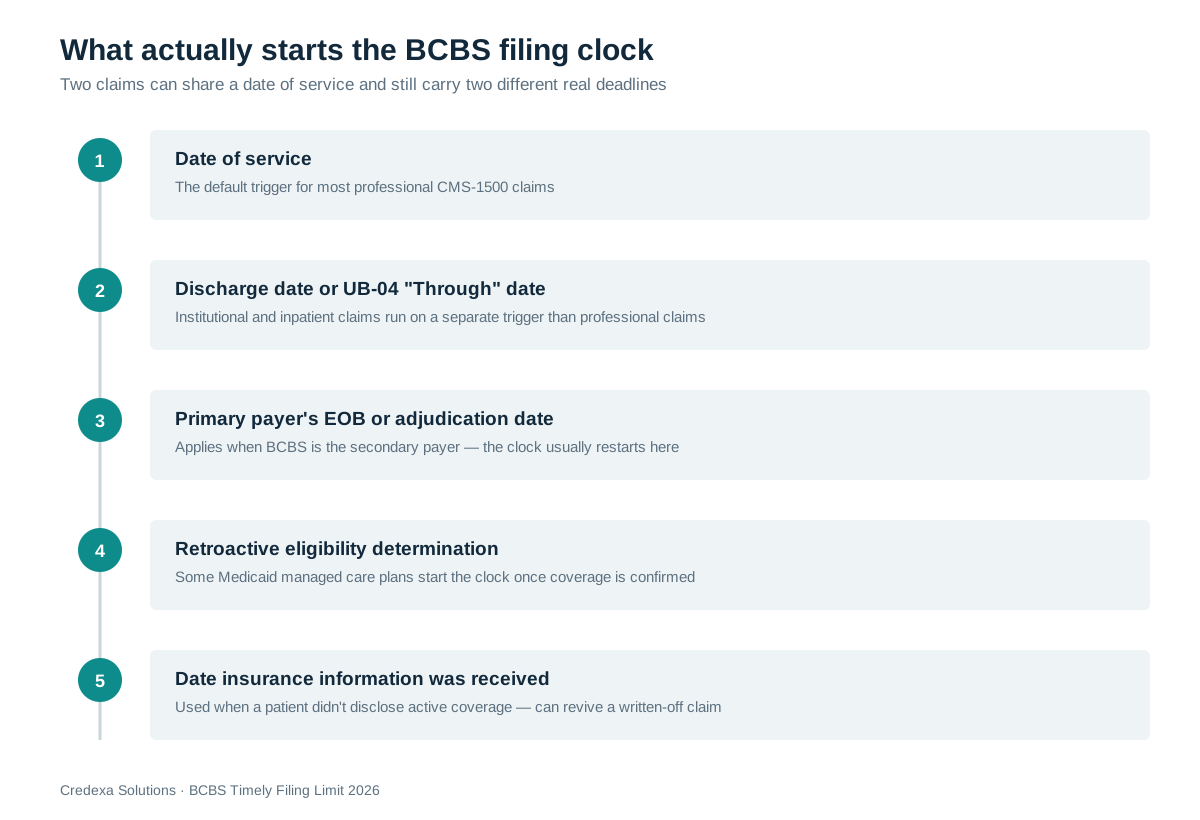
Knowing the day count only solves half the problem. The trigger that starts the count matters just as much, and it varies by claim type:
- Date of service the default for most professional (CMS-1500) claims.
- Discharge date or the UB-04 statement “Through” date applies to institutional and inpatient claims. Hospital billing teams frequently lose claims here by applying the professional-claim rule to a facility bill.
- The primary payer’s EOB or adjudication date when BCBS is the secondary payer, the clock typically restarts here instead of running from the date of service.
- Retroactive eligibility determination some Medicaid managed care plans start the clock when coverage is confirmed, not when the service was rendered.
- The date insurance information was received a lesser-known trigger some plans apply when a patient didn’t disclose active coverage at the time of service, which can effectively revive a claim you assumed was dead.
Two claims with the same date of service can carry two different real deadlines. A payer grid that only tracks a day count — without a trigger column will eventually cost you a claim that was actually still inside the window.
BCBS Filing Limits by Line of Business
A single Blue plan can run four different filing clocks across four product lines. Saving one “BCBS = X days” entry in your system covers exactly one of them.
| Line of Business | Typical Window | Watch For |
|---|---|---|
| Commercial (group and individual) | 90–365 days | Anthem and BCBS Massachusetts anchor the short end |
| Medicare Advantage | Set by the plan’s own contract | MA does not automatically follow Original Medicare’s one-year rule — Anthem, for example, applies its 90-day commercial standard to MA professional claims |
| Medicaid managed care | 90–365 days, by state | BCBS-branded Medicaid products often publish separate policies from the commercial book |
| Federal Employee Program (FEP) | 365 days for participating providers | Local administering plans sometimes apply their own overlay on top of the national rule |
Original Medicare’s fee-for-service filing rule runs a full calendar year under 42 CFR § 424.44, but that federal regulation governs traditional Medicare only. Medicare Advantage claims are adjudicated under the private plan’s own contract, so the plan’s rule wins even when it’s shorter than the federal standard.
BCBS Federal Employee Program (FEP) Timely Filing
Participating providers file FEP claims within 365 days of the date of service, under national Blue Cross Blue Shield Association program rules rather than the local plan’s commercial standard.
This is where multi-state practices get tripped up. A biller working in an Anthem state runs a 90-day commercial clock all day, sees an Anthem-branded FEP card, and applies the same 90-day assumption writing off a claim at day 100 that actually had another nine months of runway left.
Members and non-participating providers work to a different structure: a calendar-year deadline running through December 31 of the year following the date of service, rather than a rolling day count.
Local administering plans can complicate the picture further always confirm the FEP rule with the specific plan adjudicating the claim, since national program rules and local plan policy don’t always line up perfectly.
BlueCard Claims: Whose Deadline Actually Applies
BlueCard claims are submitted to your local Blue plan, which routes them to the member’s home plan for adjudication — and the filing deadline that governs the claim comes from the home plan, not the plan you submitted to locally.
Think of it like ordering from a franchise: you place the order at the local counter, but the rules come from the company that issued the card. A member carrying an Anthem ID treated at a facility in a state where the local Blue plan allows a full year is still working against Anthem’s 90-day clock.
The five-step alpha prefix check that prevents most BlueCard denials:
- Read the three-character alpha prefix on the member’s ID card
- Identify the home Blue plan that prefix belongs to
- Pull that specific plan’s filing deadline for the correct product line
- Check your own participating provider agreement for a contract override
- Confirm the claim type initial, corrected, secondary, or appeal since each can carry a different clock
Make the alpha prefix a searchable field in your practice management system rather than a note in a free-text box. Claims that land in the wrong plan’s workflow burn filing days before anyone notices.
Professional vs. Facility Claims: A Split Most Guides Skip
Professional and facility claims frequently run on different clocks within the same Blue plan, and most published deadline lists only cover the professional side.
- BCBS Illinois: Professional claims (PPO, Blue Choice PPO, Blue HPN) run 180 days from the date of service, or from discharge/transfer for inpatient care. Facility claims are governed by a separate section of the commercial provider manual, with no single published number.
- Capital Blue Cross (Pennsylvania): CMS-1500 claims run 180 days from the date of service or discharge. UB-04 claims from non-hospital facilities also run 180 days, while certain hospital types get a longer window.
Any practice billing both professional and facility claims to the same Blue plan needs two separate rows in its payer grid one number will not cover both claim types.
BCBS Corrected Claim Deadlines Run on a Separate Clock
A corrected claim isn’t the same thing as an appeal, and it isn’t the same thing as resubmitting a rejected claim. Mixing the three up is one of the most expensive mistakes in a billing office:
- A corrected claim fixes a billing error on a claim that already processed.
- An appeal disputes a decision the plan already made.
- A resubmission applies to a claim that was rejected before it ever entered adjudication.
Some plans measure the corrected-claim window from the original remittance date rather than the date of service — meaning a claim your team wrote off as dead may still have an open corrected-claim window.
Notable industry shift: Effective September 1, 2026, Highmark now requires corrected claims to arrive within 15 months (455 calendar days) of the original claim’s finalization date, covering Commercial, Medicare Advantage, and FEP claims (BlueCard Home is excluded). Treat this as a signal plans are increasingly enforcing corrected-claim timeliness as its own separate rule rather than folding it into the original filing window.
Getting the resubmission code right matters. Frequency code 7 marks a replacement claim; code 8 voids one. Submit it incorrectly and the plan reads your correction as a brand-new original claim which then denies as a duplicate, and the timely filing clock kept running the entire time you were fighting that mistake.
BCBS Secondary and Coordination of Benefits (COB) Claims
When BCBS is the secondary payer, the clock usually stops counting from the date of service and restarts from the primary payer’s adjudication or EOB date. A claim that looks 200 days old measured against the date of service might only be 20 days old measured against the rule that actually applies.
This cuts both ways: a primary payer that takes eight months to adjudicate leaves a very short runway on the secondary submission, and the countdown starts the moment that EOB posts whether or not anyone on your team is watching for it.
Why COB claims die more often than any other claim type:
- The primary EOB has to be attached to the secondary claim some plans won’t consider the claim without it.
- The secondary queue simply goes unworked. Primary claims get attention because they carry the larger balance; secondary claims sit until someone runs an aging report, by which point a short secondary window has often already closed.
The fix costs almost nothing to implement: the moment a primary EOB posts, the secondary claim goes out the same day, assigned to one accountable person not filed for “next week.”
BCBS Appeal Deadlines: A Separate Clock From Filing
The appeal window is a completely different deadline from the initial filing window, and it runs from the remittance advice or denial date, not the date of service. Appeal windows across Blue plans range roughly from 60 days (Anthem) up to 180 days (several plans), and missing this second clock forfeits the claim even when the original filing was submitted with time to spare.
This is a common and completely avoidable way to lose a clean claim: it goes out on day 40 of a 90-day window, denies on day 55, sits untouched in a denial queue, and the 60-day appeal window quietly closes while the claim was never actually at risk on the filing side.
Medicare Advantage compresses everything. MA appeal windows generally run around 60 days shorter than most commercial BCBS timelines with expedited appeals for urgent clinical situations decided within 72 hours. A team calibrated to a 180-day commercial rhythm can miss an MA appeal deadline by months if they don’t separate the two mentally.
CO-29 Denial Code: What It Means and How to Fix It
CO-29 is the X12 claim adjustment reason code indicating the timely filing limit has expired, typically paired with a remark code like N211.
Two very different situations trigger this same code:
- The claim genuinely went out late.
- The claim was filed on time, but the plan has no record of receiving it.
Only the second scenario is winnable on appeal and it’s winnable more often than most teams assume, provided the documentation is right.
What Counts as Proof of Timely Filing
The consistent pattern across Blue plans: third-party acknowledgment beats your own internal records.
| Evidence Type | Generally Accepted |
|---|---|
| 999 acceptance report from your clearinghouse | Yes |
| 277CA claim acknowledgment | Yes |
| Electronic batch response report | Yes |
| Certified mail receipt with required mail log | Yes, with log |
| Primary carrier EOB showing timely primary filing | Yes |
| Billing software screenshot showing the claim was “sent” | Usually not sufficient |
| Failed or returned claim submission | No |
A report generated by your own software only proves you pressed send. A 999 or 277CA acknowledgment proves a third party actually received the transmission and that distinction is usually what decides a CO-29 appeal.
How to Appeal a CO-29 Denial in Four Steps
- Confirm which filing rule actually applied plan, line of business, clock trigger, and whether your provider contract overrides the published default.
- Pull the third-party acceptance artifact the 999 or 277CA, not your internal send log along with the original claim and the remittance showing the CO-29 denial.
- Write the appeal to answer one question only: did the claim arrive inside the applicable window? State the filing limit, the date of service, the transmission date, and the day count. Appeals that argue medical necessity instead of proof of receipt get denied again, because that isn’t the question being reviewed.
- Submit through the plan’s required channel. Several Blue plans require a specific appeal form, and an appeal sent the wrong way can get closed as incomplete while the appeal clock keeps running.
When the Filing Window Has Already Closed
Good cause exceptions exist at most Blue plans for documented circumstances such as natural disasters, clearinghouse or system outages, retroactive eligibility determinations, coordination-of-benefits delays, and plan administrative error. These go through the formal appeal process on a case-by-case basis and shouldn’t be relied on as a routine workflow.
Can you bill the patient instead? Generally, no. When the late filing was on the provider’s side, participating provider agreements typically prohibit shifting that balance to the patient the write-off lands on the practice. The narrow exception involves documented patient-caused delay, such as a member who withheld active coverage information at intake; some plans start the clock from the date that information was actually received in those specific, well-documented cases.
How to Prevent BCBS Timely Filing Denials
Build a payer grid by plan, product line, and claim type not by “BCBS.” Anthem commercial, Anthem Medicare Advantage, and Anthem Medicaid deserve three separate rows, each with its own filing window, clock trigger, corrected-claim window, COB window, appeal window, and a “last verified” date.
Set internal deadlines well inside the actual payer deadline. A 30-day internal target on a 90-day plan, or 45 days on a 180-day plan, leaves room to catch and fix a rejection before the real deadline arrives. Teams that treat the payer’s deadline as their own internal target have no recovery room when a claim rejects on day 85.
Work clearinghouse rejections daily, not weekly. A rejected claim was never actually filed the clock keeps running while it sits untouched in an error queue. This single habit prevents more BCBS revenue loss than almost anything else on this list.
Age claims by date of service, sorted by filing window, not by dollar value. A 90-day Anthem claim sitting at day 60 is more urgent than a 365-day claim at day 200, and a queue sorted purely by balance will bury that distinction every time.
This kind of ongoing tracking across dozens of plans, product lines, and claim types simultaneously is exactly where in-house billing teams run out of bandwidth, and it’s a core part of what a dedicated revenue cycle management partner is built to handle. If you want the fuller picture of how each stage of the revenue cycle from eligibility verification through denial management and reporting fits together, our complete RCM guide for healthcare providers walks through the entire process end to end, including the KPIs worth tracking alongside your payer grid.
Frequently Asked Questions
What is the timely filing limit for BCBS claims? There isn’t one universal number Blue Cross Blue Shield operates as a federation of independent, locally run plans, so the deadline depends entirely on which specific plan issued the member’s card. Windows generally run from 90 days to one year from the date of service, with your participating provider agreement able to override the published default.
Is the BCBS timely filing limit the same in every state? No. Each BCBS licensee sets its own filing deadline, appeal window, and corrected-claim rules independently. BCBS Illinois’s rules have no bearing on what Anthem enforces in Ohio, even though both operate under the same national brand.
What is the timely filing rule for the BCBS Federal Employee Program? Participating providers file within 365 days of the date of service under national FEP program rules. Members and non-participating providers work to a calendar-year deadline instead of a rolling day count, and local administering plans can add their own overlay on top of the national rule.
What is the timely filing limit for corrected claims with BCBS? It depends on the plan and, critically, on what starts the clock some plans measure from the original date of service, while others (including Highmark, effective September 1, 2026) measure from the date the original claim was finalized. Never assume a corrected claim follows the same clock as the original submission.
How does the BCBS timely filing limit work for secondary claims? Most plans restart the clock from the date the primary payer’s EOB or adjudication was received, rather than continuing to count from the original date of service. This is one of the most common reasons COB claims expire the secondary queue simply isn’t monitored closely enough to catch a short restart window.
Can a patient be billed if a claim is denied for missing the BCBS timely filing limit? Generally no, when the delay originated with the provider participating provider agreements typically prohibit passing that balance to the member. The narrow exception involves documented, patient-caused delays in disclosing active coverage.
What is a CO-29 denial, and can it be appealed? CO-29 is the standard code indicating a claim missed the timely filing deadline. It’s only genuinely appealable when the claim was actually filed on time and the plan simply has no record of receiving it which requires a third-party acceptance artifact like a 999 report or 277CA acknowledgment, not an internal software log, to win.
How Credexa Solutions Helps Providers Stop Losing Revenue to Filing Deadlines
Tracking a different filing window, appeal deadline, and corrected-claim rule for every Blue plan a practice bills on top of every other payer is exactly the kind of high-volume, detail-dependent work that overwhelms in-house teams that are already stretched thin.
At Credexa Solutions, we build payer grids by plan, product line, and claim type; work rejection queues daily instead of weekly; and track claims by aging bucket so nothing quietly expires while a team is focused elsewhere. When CO-29 denials start clustering around a specific Blue plan, that’s almost always a payer-grid or workflow gap rather than bad luck and it’s fixable once it’s identified.
If your practice is seeing recurring timely filing denials, get in touch with our revenue cycle team for a review of where the pattern is coming from and which claims may still be recoverable. And if you’re looking to strengthen the revenue cycle more broadly, our Revenue Cycle Management guide and our breakdown of RCM reporting and its impact on cash flow are the natural next reads.
This guide reflects publicly available BCBS provider policy information as of September 2026. Filing limits change, and your participating provider agreement can override any published default always confirm the applicable window in your current provider manual and contract before relying on any figure, including these.
Further reading: Blue Cross Blue Shield Association — the BCBS system | 42 CFR § 424.44 — Medicare timely filing rule | X12 Claim Adjustment Reason Codes | Texas Department of Insurance — prompt pay FAQ