Getting a TennCare Medicaid ID feels like the finish line. It isn’t. It’s the starting gun. A practice can complete Tennessee Medicaid provider enrollment perfectly, receive its Medicaid ID from the Division of TennCare, and still watch claims bounce back unpaid for months not because the enrollment was wrong, but because enrollment, credentialing, and contracting are three separate processes that most practices treat as one.
This guide walks through the entire 2026 TennCare enrollment path the PDMS portal, the DataSpring roster, the four managed care contracts every provider eventually signs, the three-year revalidation clock, and, most importantly, the specific coding and mapping errors that turn a fully enrolled provider into a fully denied one. If your practice is billing TennCare, ordering for TennCare members, or planning to expand into Tennessee, this is the version written for the people who actually have to make the claims pay.
What Tennessee Medicaid Provider Enrollment Actually Means
Tennessee Medicaid provider enrollment is the process of registering with the Division of TennCare, Tennessee’s Medicaid agency, to receive a TennCare Medicaid Provider Identifier usually shortened to Medicaid ID or MID. That number is what allows TennCare to recognize you as a provider in its system at all. Without it, TennCare has no legal basis to pay a claim, no matter how clean the billing is.
TennCare itself operates differently from most state Medicaid programs. It runs under a federal Section 1115 demonstration waiver rather than a traditional state plan, and it delivers nearly all care through managed care organizations rather than fee-for-service. That structural detail matters for billing teams because it means the vast majority of TennCare claims never touch the state directly they go to a health plan. The state issues your ID; the plans issue your payment.
Enrollment through the PDMS portal is also broader than most providers assume. It doesn’t just apply to physicians who see TennCare patients and bill directly. Anyone who orders, refers, or prescribes for a TennCare member even a specialist who never files a single TennCare claim needs an active Medicaid ID, or the pharmacy, lab, or imaging center downstream won’t get paid for what that provider ordered.
What’s New for TennCare Providers in 2026
Several policy shifts changed the enrollment landscape for Tennessee providers this year, and each one affects how quickly or how painfully a new application moves through the system.
Electronic-only enrollment is now formalized. TennCare’s enrollment policy, revised in mid-2026, confirms that paper applications are not accepted anywhere in the process. Everything routes through PDMS, including updates for providers who only order or prescribe.
Screening moved to a risk-tier model. TennCare adopted the same risk-based screening categories CMS uses for Medicare limited, moderate, and high rather than applying a flat set of checks to every provider type.
An off-cycle revalidation push is underway. CMS directed TennCare to revalidate every high-risk and non-NPI provider by mid-2027, and every remaining provider on a rolling schedule after that. This means your revalidation date can move outside your normal three-year cycle without warning, based purely on a federal directive rather than anything your practice did.
The federal application fee increased. The Federal Register set the calendar-year 2026 institutional application fee at $750, up from the prior year. In practice, this affects almost no one enrolling with TennCare specifically, which the cost section below explains.
CAQH ProView is now DataSpring. Same login, same data, same platform just a new name that TennCare’s own materials are still catching up to across its website.
Of these, the off-cycle revalidation initiative deserves the most attention from credentialing coordinators, because it breaks the assumption that your revalidation date is fixed and predictable. TennCare sends notice by email, gives you 45 days to respond, and if the address on file belongs to someone who left the practice a year ago, that clock runs out with nobody watching it.
Who Actually Needs to Enroll With TennCare
Nearly every provider who touches a TennCare member in any capacity needs a Medicaid ID, and the category most practices underestimate is the ordering, referring, and prescribing group.
Billing and rendering providers who deliver services to TennCare members and expect direct payment are the obvious case. Group practices have a layered requirement here: the group itself enrolls and receives its own Medicaid ID, and then every rendering provider inside that group enrolls individually and gets linked to the group’s billing profile.
Ordering, referring, and prescribing providers are the group that gets missed. A specialist who never bills TennCare directly but writes a prescription or orders imaging for a TennCare patient still needs an active Medicaid ID under federal rule 42 CFR 455.410. If that ID isn’t active, the pharmacy or imaging center’s claim denies and the physician’s office rarely finds out until the pharmacy calls asking why the prescription rejected.
Out-of-state and telehealth providers enroll based on where the patient lives, not where the practice is located. If you’re billing for a TennCare member’s care, Tennessee enrollment applies regardless of your address, and multi-state groups need to repeat this process separately in every state where they see Medicaid patients.
The one group that doesn’t enroll independently is providers who are legally required to work under another clinician’s supervision their supervising provider’s enrollment covers them.
Enrollment, Credentialing, and Contracting Are Not the Same Thing
This is the single most expensive misunderstanding in Tennessee Medicaid billing, and it’s worth isolating before anything else.
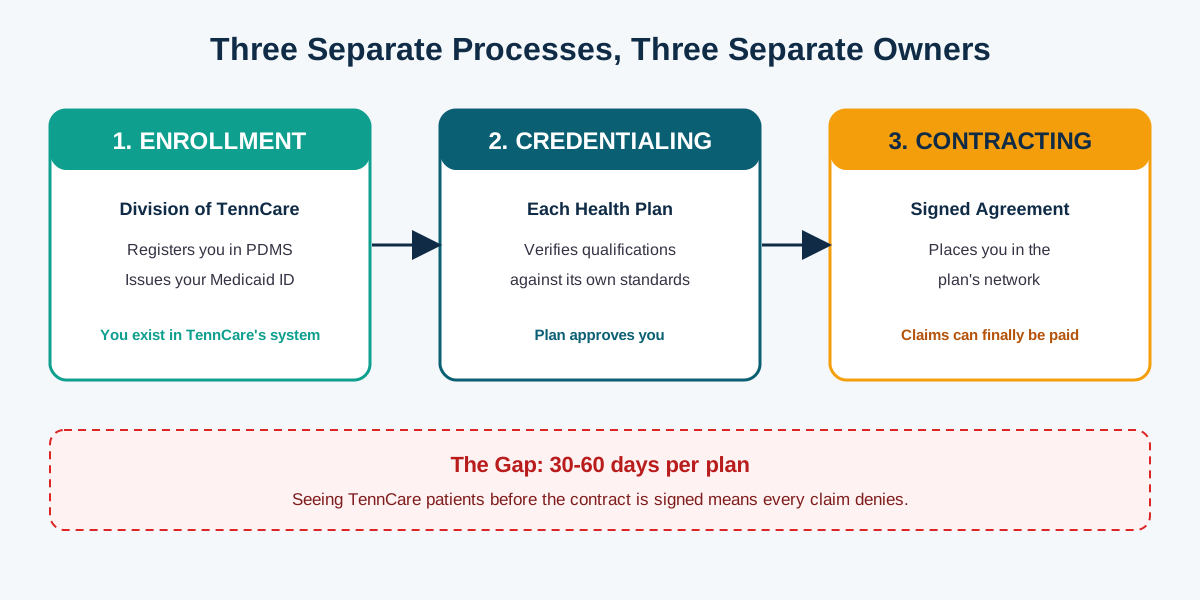
Enrollment is the Division of TennCare registering you and issuing a Medicaid ID. Credentialing is each individual health plan verifying your qualifications against its own internal standards. Contracting is the signed agreement that actually places you in that plan’s network. They run sequentially, they’re controlled by different organizations, and finishing one does not start the next automatically.
A practice that completes state enrollment and immediately starts scheduling TennCare patients before any plan contract is signed will watch every one of those claims deny. The Medicaid ID makes you exist in TennCare’s system. It says nothing about whether a specific health plan has agreed to pay you. That gap between “enrolled” and “in-network” typically runs 30 to 60 days per plan, and revenue generated inside that gap is difficult to recover after the fact.
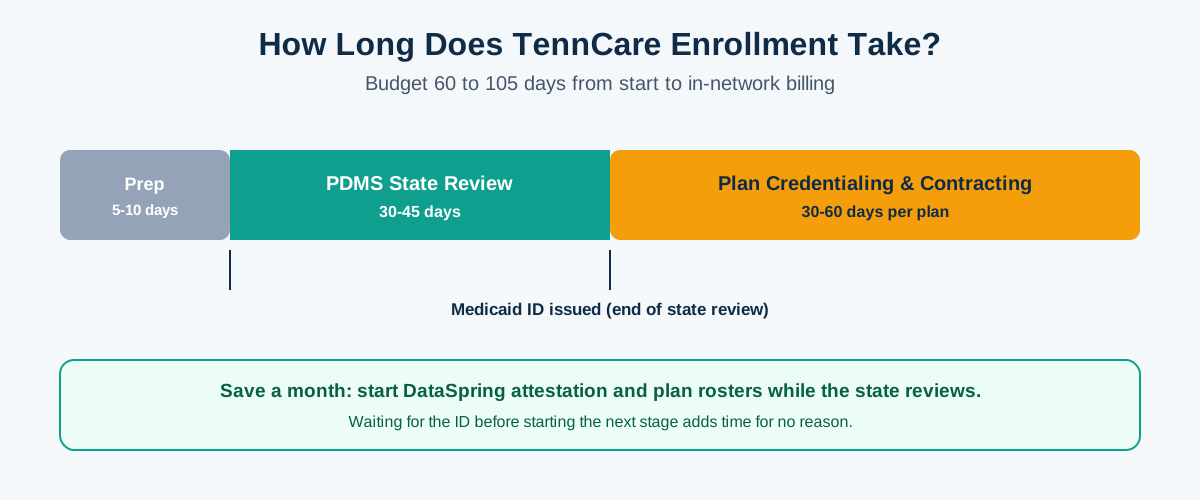
The upside: while your Medicaid ID application sits in state review, nothing stops you from preparing for the next stage. Document collection, DataSpring attestation, and roster preparation for each plan can all run in parallel with state processing. Practices that wait for the ID before starting anything else routinely add a full month to their network activation timeline for no reason.
How Individual Providers Enroll: The PDMS and DataSpring Path
Individual enrollment in Tennessee is a two-part system: a one-time registration on the PDMS portal, paired with an ongoing data feed from your DataSpring profile.
- Secure a Type 1 NPI through NPPES. Individual providers need a unique NPI for every service location and provider type they enroll under a detail multi-site clinicians routinely underestimate.
- Get your DataSpring profile into attested status. TennCare cannot pull your data until DataSpring shows an attested profile. This single step stalls more applications than any other item on the list.
- Register once through the PDMS portal at pdms.tenncare.tn.gov, following the individual provider pathway and entering your identifying information.
- Authorize the release of your DataSpring data to TennCare. Once authorized, updates flow automatically from that point forward no repeat portal visits required.
- Complete ownership and disclosure requirements, including disclosure of anyone with 5% or greater direct or indirect ownership interest.
- Monitor the application and respond quickly. TennCare’s response windows for additional information requests are short, and the file stalls until you answer.
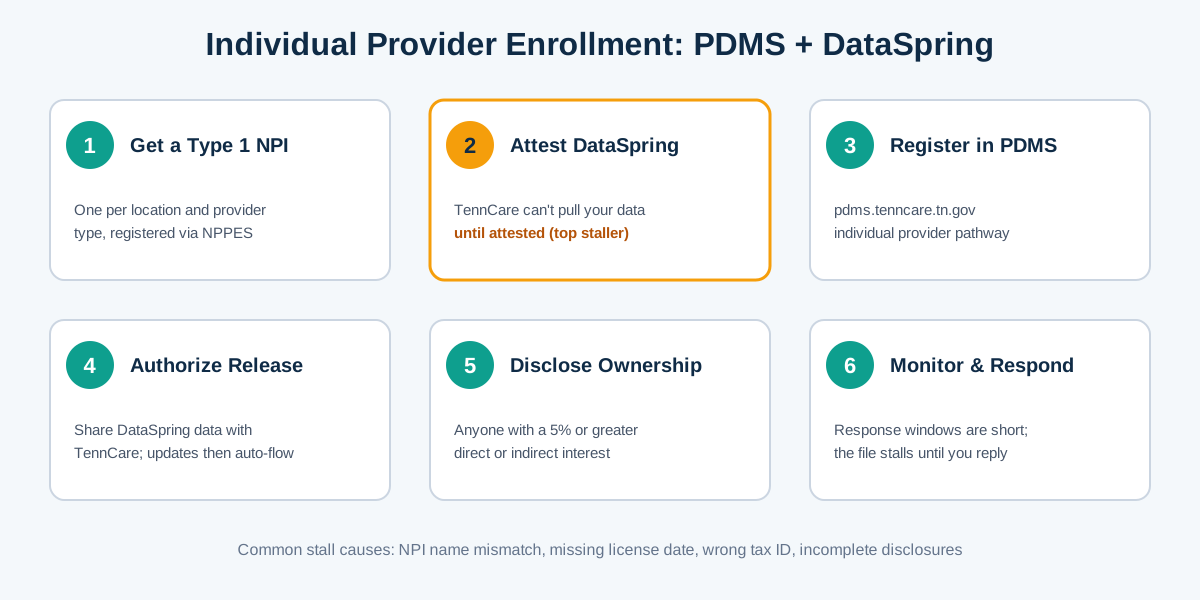
TennCare publishes the errors that most commonly stall individual applications, and none of them are complicated: a provider name that doesn’t match the NPI exactly, a missing license effective date, an incorrect tax ID, incomplete ownership disclosures, or an unfinished attestation. Each one bumps the file out of automated processing and into manual review, where a predictable timeline stops being predictable.
How Groups, Clinics, and Facilities Enroll
Group and facility enrollment runs through a separate PDMS pathway the “All Other Provider Registration Information” option and produces a group-level Medicaid ID once TennCare approves the submission.
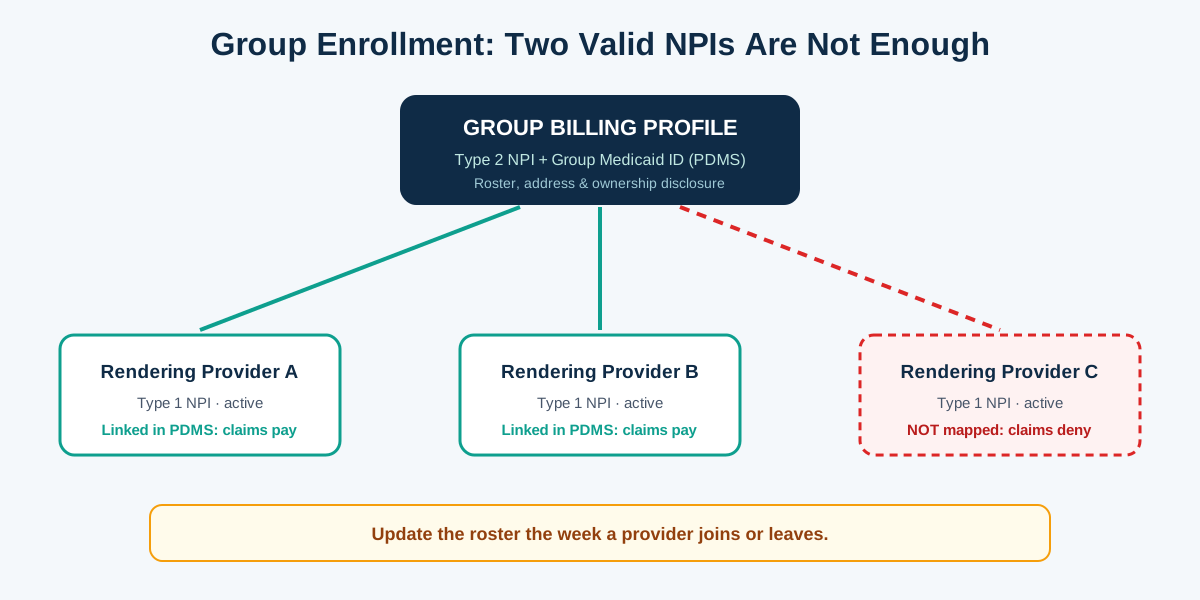
The group account is where three ongoing responsibilities live: address updates, the provider roster, and the Disclosure of Ownership declaration. None of these are annual tasks. A roster that isn’t updated the week a provider joins or leaves goes stale fast, and a stale roster is one of the most common sources of downstream claim denials.
Groups need a Type 2 NPI, and every rendering provider inside the group needs their own Type 1 NPI. Critically, having both isn’t enough the rendering provider has to be actively mapped to the group’s billing profile inside PDMS, or claims fail even though both NPIs are individually valid and active. This mapping step, more than almost anything else in the enrollment process, is where denials originate for groups that assume enrollment alone guarantees payment.
Which TennCare Health Plans Require Their Own Contract
TennCare members are covered through three at-risk managed care organizations plus TennCare Select, and all four operate statewide across West, Middle, and East Tennessee. Every plan negotiates its own contract, maintains its own fee schedule, and adjudicates its own claims meaning a practice serving TennCare patients will eventually need all four relationships in place.
| Plan | Parent Organization |
|---|---|
| BlueCare | BlueCross BlueShield of Tennessee |
| Wellpoint (formerly Amerigroup) | Elevance Health |
| UnitedHealthcare Community Plan | UnitedHealth Group |
| TennCare Select | Administered through BlueCare Tennessee |
Behavioral health is not carved out into a separate network in Tennessee medical, behavioral, and long-term care services all run through the same four at-risk plans, which is one point where Tennessee is actually simpler than many other states for therapy and psychiatry practices.
Beyond the four MCOs, three additional payment channels sit outside this structure: Cover Kids (Tennessee’s CHIP program), a separate dental benefits manager, and a separate pharmacy benefits manager. Every one of these depends on your underlying Medicaid ID staying active if it lapses, all three channels stop paying alongside the medical plans.
How Long Tennessee Medicaid Provider Enrollment Actually Takes
TennCare doesn’t publish an official processing time for new enrollment applications, but the pattern providers consistently report breaks down predictably.
| Stage | Typical Duration |
|---|---|
| Document and DataSpring preparation | 5–10 days |
| PDMS state review | 30–45 days |
| Medicaid ID issued | End of state review |
| Plan credentialing (per plan) | 30–60 days |
| Revalidation review (later) | Up to 30 days |
Budgeting 60 to 105 days between the start of the process and full in-network billing status is realistic. The single biggest lever a practice controls is application completeness the same short list of errors (name mismatches, missing license dates, incorrect tax IDs, incomplete disclosures) accounts for most of the delays that push a file into manual review.
Risk-Based Screening: Who Actually Gets Fingerprinted
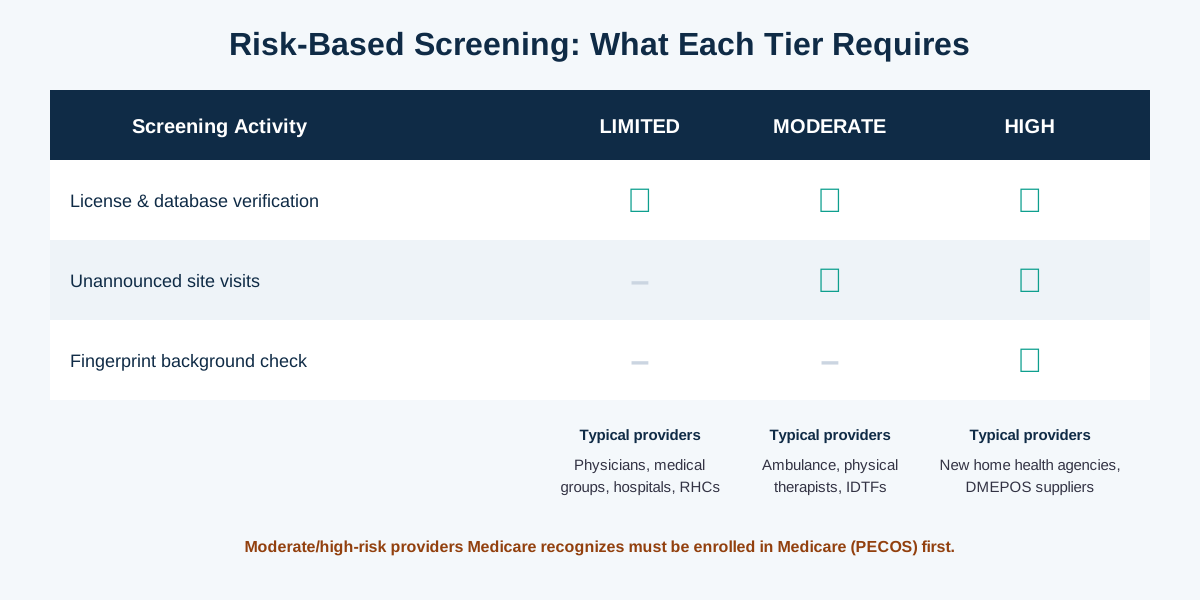
TennCare screens every provider according to a risk tier assigned by CMS, not the state itself, and the screening intensity scales with that tier.
| Screening Activity | Limited | Moderate | High |
|---|---|---|---|
| License and database verification | Yes | Yes | Yes |
| Unannounced site visits | No | Yes | Yes |
| Fingerprint-based background check | No | No | Yes |
Most physicians, medical groups, hospitals, and rural health clinics fall into the limited tier. Ambulance suppliers, physical therapists, and independent diagnostic testing facilities typically land in moderate. High-risk status is reserved largely for newly enrolling home health agencies and DMEPOS suppliers and importantly, that same agency drops to moderate risk once it revalidates a few years later. The risk tier moves with the type of transaction, not with the business itself.
One requirement catches new applicants off guard: for provider types Medicare also recognizes, moderate- and high-risk providers must already be enrolled in Medicare, verified through PECOS, before TennCare will register them. Practices that assume Tennessee enrollment can happen independently of Medicare status discover this the hard way.
What Enrollment Actually Costs
The headline number a $750 federal application fee for calendar year 2026 applies to almost no one enrolling with TennCare. Individual physicians and nonphysician practitioners are exempt outright, and TennCare exempts nearly all of its managed care providers through a hardship exemption obtained from CMS. NPI registration, the DataSpring profile, and plan contracting all carry no fee for any provider type.
The real cost isn’t a line item it’s staff time. Hours spent inside the PDMS portal, documents chased across four separate plan applications, follow-up calls to provider services lines, and the revenue that doesn’t get collected during a delay a cleaner submission would have avoided entirely.
Can You Bill TennCare While Enrollment Is Pending?
No. Without an active Medicaid ID, TennCare has no basis to pay a claim, and no health plan can contract with you before that ID exists. Claims submitted during a pending application don’t retroactively become payable once approval comes through they simply fail, sometimes as a formal denial and sometimes as a clearinghouse-level rejection that never even reaches TennCare’s adjudication system. The second category is the more dangerous one, because rejections at the clearinghouse level often don’t appear in standard denial reports, which means nobody works them.
TennCare does allow retroactive billing in some cases, tied to the effective date assigned when your enrollment is approved. That date determines exactly what can be resubmitted get it in writing the moment your Medicaid ID is issued, and track every TennCare encounter during the pending period so you have a clean resubmission list ready rather than reconstructing one from memory months later.
Why TennCare Claims Deny Even After You’re Fully Enrolled
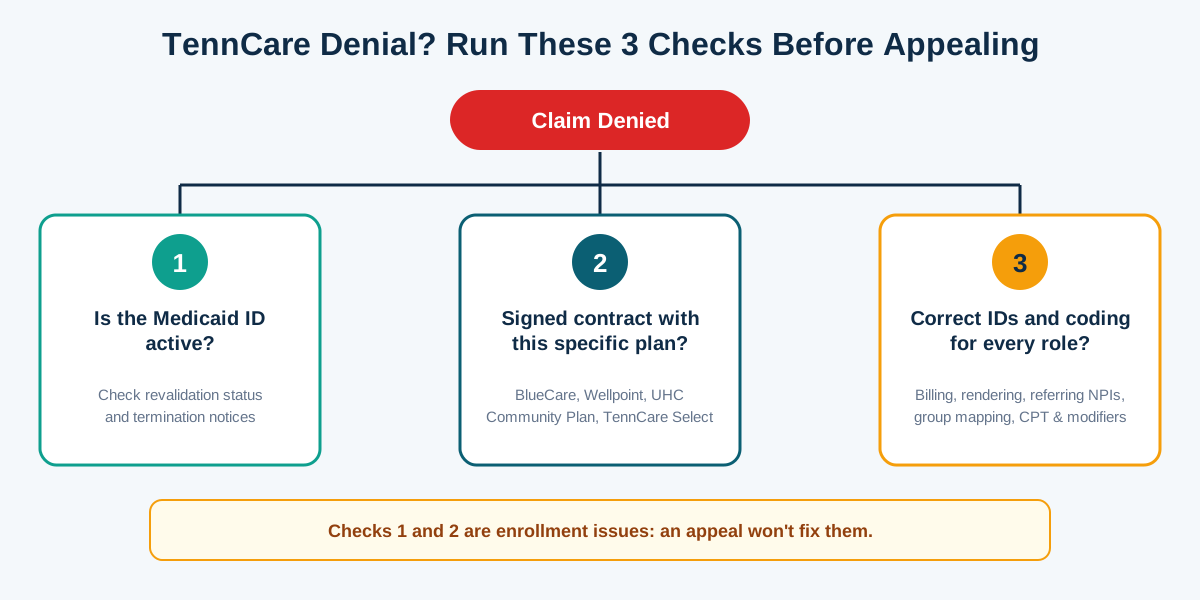
This is where enrollment problems and billing problems collide, and it’s the section every practice’s denial-management workflow should be built around. Three patterns account for the overwhelming majority of post-enrollment TennCare denials.
You’re enrolled but not contracted with the specific plan. Tennessee’s Medicaid program operates on capitation the state pays each plan a flat monthly amount per member so a plan’s willingness to pay comes down entirely to whether a signed contract exists. No contract means no payment path, regardless of how clean the claim is.
The rendering provider isn’t mapped to the group’s billing profile. A valid Type 2 group NPI and a valid Type 1 individual NPI will still generate denials if they aren’t linked inside PDMS. These tend to reject quickly rather than pend, which sounds like an advantage but often isn’t fast rejections bypass standard denial reporting and age quietly until someone runs a dedicated unbilled-claims report.
Provider identification doesn’t meet TennCare’s claim requirements. Every claim needs an NPI for the billing provider, the rendering provider, and any referring or operating provider named on it. A name change, address change, or taxonomy update that isn’t reported to both NPPES and TennCare within 30 days will eventually cause a claim to fail validation against outdated records and the coding and identification details on the claim itself matter just as much as the enrollment record behind it.
This is precisely where accurate, up-to-date coding intersects with enrollment status. A perfectly enrolled and contracted provider can still stack up denials if the CPT and modifier reporting on the claim doesn’t match what the payer expects for that service which is a coding accuracy issue, not an enrollment issue, and it requires a completely different fix. Practices billing specialty procedures under TennCare plans benefit from keeping current on payer-specific coding guidance, such as the coding structure covered in our guides on ophthalmology CPT codes, lithotripsy CPT codes, and general surgery CPT codes, since each of those specialties carries its own set of payer-specific denial triggers beyond simple enrollment status.
When a TennCare denial arrives, the fastest diagnostic path is checking three things before anyone drafts an appeal: is the Medicaid ID currently active, is there a signed contract with that specific plan, and does the claim carry correct provider identification and coding for every role involved. Two of those three are enrollment issues wearing a denial’s clothing appealing them burns a cycle without fixing the underlying record.
The Three-Year Revalidation Clock
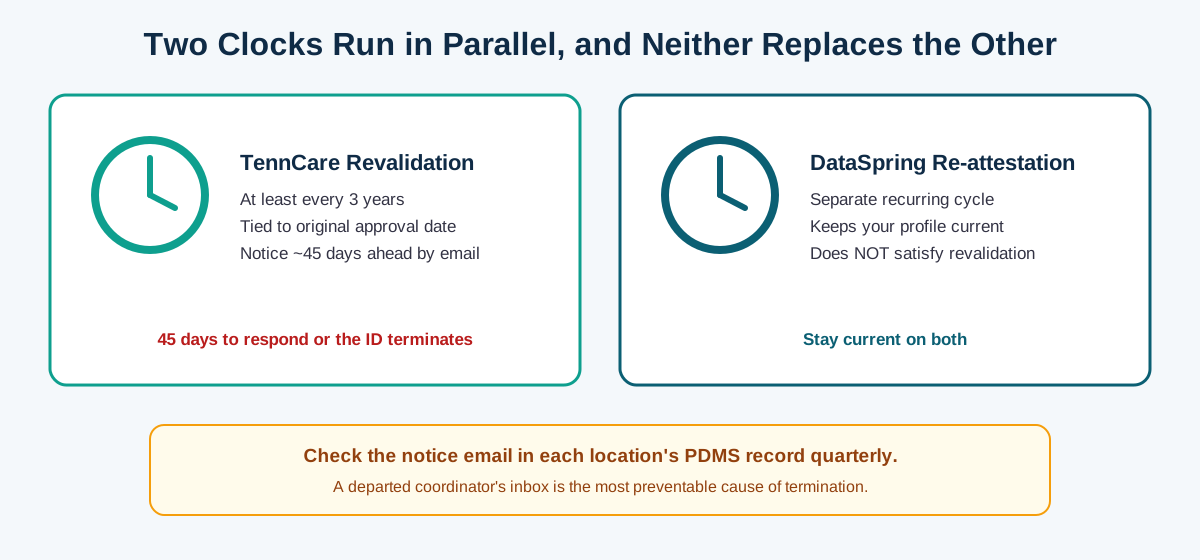
TennCare providers revalidate at least every three years on a continuous, rolling schedule tied to the date your original enrollment application was approved not to a calendar year. TennCare emails notice roughly 45 days ahead of the deadline, and you have 45 days from that notice date to complete the process before a termination notice follows.
Multiple locations under one organization don’t share a revalidation date unless they happened to be approved the same day each location gets its own notice, sent to whatever email address sits in that location’s PDMS record. A departed credentialing coordinator’s inbox is a common, entirely preventable failure point here; checking and updating that field quarterly costs a few minutes and prevents a termination that can take weeks to unwind.
Two separate clocks run in parallel and don’t substitute for each other: Data Spring re-attestation on its own recurring cycle, and TennCare revalidation every three years. A perfectly current Data Spring profile does not satisfy TennCare’s revalidation requirement practices that assume it does sometimes only discover the gap after their Medicaid ID has already been terminated.
What Happens When Enrollment Lapses
Missing a revalidation deadline terminates the Medicaid ID, and that termination can take plan contracts down with it. Once the ID goes inactive, claim payment stops including crossover claims eligibility verification access is lost, and payment stops for everything the provider ordered or prescribed for TennCare members, even services delivered by someone else entirely.
TennCare also reserves the right to terminate providers who haven’t billed for any TennCare services in 12 consecutive months, treating reactivation afterward as a brand-new enrollment rather than a simple restart. Providers who only order, refer, or prescribe are generally exempt from this inactivity rule, since they rarely generate claims to begin with.
Ownership Changes and What They Trigger
A change in taxpayer identification number or the billing entity’s NPI counts as a change of ownership under TennCare policy, and the new entity must obtain an entirely new Medicaid ID TennCare states plainly that a MID is not transferable between owners. Buyers acquiring a Tennessee practice can generally continue billing under the seller’s NPI during the transition window, but cannot begin treating TennCare patients under a new contract until the buyer completes its own plan credentialing. Outstanding TennCare liabilities from the seller also transfer to the buyer under Tennessee law, regardless of what the purchase agreement says privately between the two parties.
Frequently Asked Questions
How long does Tennessee Medicaid provider enrollment take?
Budget 60 to 105 days total roughly 30 to 45 days for state review through PDMS, followed by 30 to 60 days per plan for credentialing and contracting.
What does it cost to enroll as a TennCare provider?
Nothing for nearly every provider type. The $750 federal fee for 2026 applies to a narrow institutional category that excludes almost all TennCare-enrolled practices.
How often do TennCare providers revalidate?
At least every three years, on a rolling schedule tied to your original approval date, with a 45-day response window once notice is sent.
Does enrollment guarantee I’m in-network with TennCare plans?
No. Enrollment issues a Medicaid ID; each of the four managed care plans separately credentials and contracts providers before claims can be paid.
Why would a claim deny after I’m fully enrolled?
The most common causes are an unsigned plan contract, a rendering provider not mapped to the group’s billing profile, or provider identification and coding on the claim that doesn’t match payer requirements.
Where Denial-Proofing Enrollment Meets Accurate Coding
Enrollment gets a provider into TennCare’s system. Contracting gets them into a plan’s network. But neither one guarantees a clean claim that final layer depends on whether every code, modifier, and provider identifier on the claim matches exactly what the payer expects. This is the gap where most Tennessee practices lose revenue quietly, long after the enrollment paperwork is finished and filed away.
Credexa Solutions works with practices at exactly this intersection. Our team handles TennCare provider enrollment support, tracks revalidation deadlines before the 45-day clock becomes a problem, and critically for denial management pairs that enrollment work with accurate, specialty-specific CPT and modifier coding so claims don’t bounce back for reasons that have nothing to do with medical necessity. When a TennCare denial lands in your AR, our team traces it back to its actual source, whether that’s a lapsed Medicaid ID, a missing plan contract, or a coding mismatch, and fixes the record instead of burning an appeal cycle on a claim that was never going to pay as submitted. If TennCare denials are piling up in your aging report, that’s exactly the pattern our denial management and coding accuracy process is built to catch before it costs another billing cycle.