If you run a medical practice, you already know the feeling: you’ve delivered the care, your staff has submitted the claim, and now you’re just… waiting. Weeks pass. Then months. Meanwhile payroll, rent, and supply orders don’t wait for anyone.
This waiting period has a name in medical billing Days in Accounts Receivable (A/R) and it is one of the clearest signals of how healthy (or how leaky) your revenue cycle really is. According to MGMA polling from mid-2026, nearly one in three medical group leaders say their days in A/R are climbing, even as operating costs keep rising for almost half of all practices (MGMA Stat, 2026). Rising A/R isn’t just an accounting inconvenience it’s cash that belongs to your practice sitting in someone else’s bank account.
The good news is that high A/R days are almost never random. They follow predictable patterns eligibility mistakes, coding errors, slow claim submission, weak denial follow-up and every one of those patterns is fixable. This guide breaks down exactly what A/R days are, why they creep upward, and the step-by-step system doctors and practice managers can use to bring them down and start collecting insurance payments faster.
What Are A/R Days, and Why Do They Matter So Much?
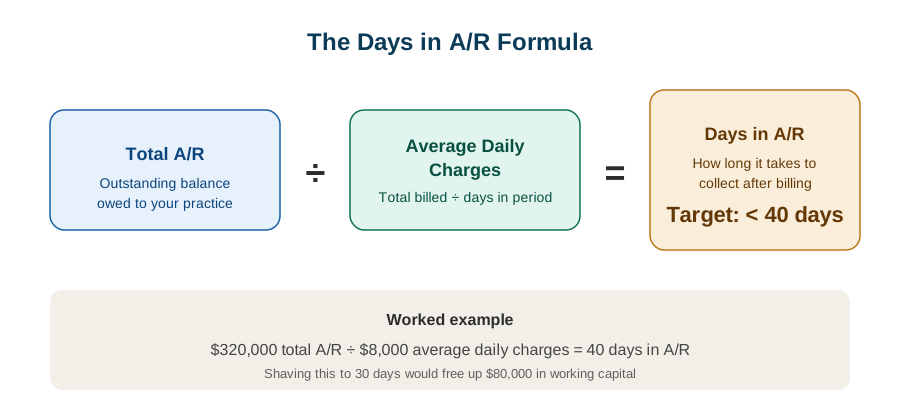
Days in A/R measures the average number of days it takes your practice to collect payment after a service has been rendered and billed. The formula is simple:
Days in A/R = Total Accounts Receivable ÷ Average Daily Charges
In plain terms: if your practice bills $10,000 a day on average and you’re carrying $400,000 in outstanding receivables, your Days in A/R is 40. That means, on average, it takes 40 days from the date of service to the date you actually get paid.
Why does this number matter more than your total revenue or your total A/R balance? Because a practice can look profitable on paper while quietly starving for cash. A large but slow-moving A/R balance means you’ve earned the money but haven’t collected it and you still have to cover payroll, rent, and supplies while you wait. A3 Medical Billing’s 2026 benchmarking data illustrates the scale of this: a $5 million practice that shaves just 10 days off its A/R frees up roughly $137,000 in working capital that would otherwise be sitting in payer limbo (A3 Medical Billing, 2026).
What’s a “Good” A/R Days Number in 2026?
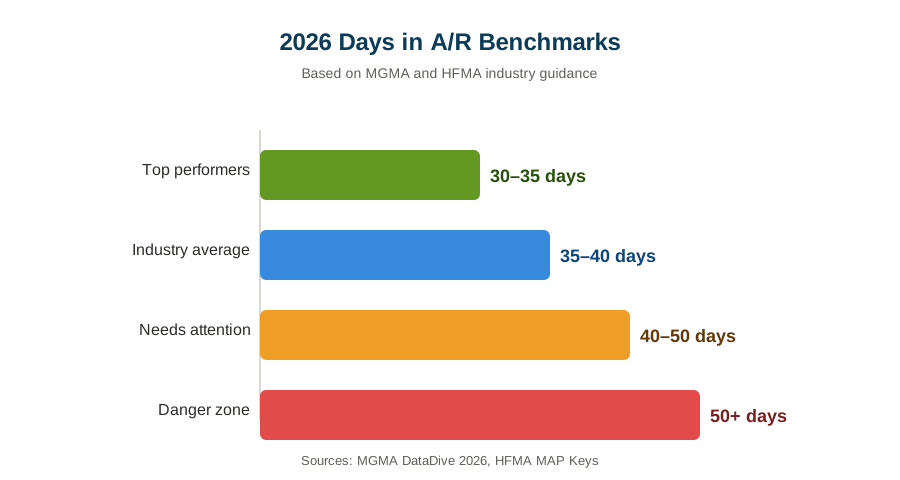
Benchmarks vary slightly by source, but the consensus from the major industry bodies is consistent:
- MGMA (Medical Group Management Association): top-performing practices collect in under 30–35 days; the broader median across specialties sits closer to 35–40 days.
- HFMA (Healthcare Financial Management Association): recommends practices stay within the 30–40 day range, with claims aged past 90 days kept under 10% of total receivables.
- Danger zone: once A/R days climb past 50, it typically signals a structural problem not a one-off billing mistake somewhere in your front-end, coding, or follow-up process.
It’s also worth benchmarking against your own specialty rather than the all-practice average. A behavioral health or multi-payer surgical practice will naturally run higher than a single-payer primary care clinic, simply because of payer mix and prior authorization complexity. The important number isn’t the industry average it’s the trend line for your practice, month over month.
A Worked Example: Calculating Your Own Days in A/R
Numbers stick better with a real example. Say your practice bills an average of $8,000 per day in charges, and right now your total outstanding A/R balance is $320,000. Using the formula from above:
$320,000 ÷ $8,000 = 40 days in A/R
That’s right at the edge of the “acceptable” range most benchmarks cite not a crisis, but not a strength either. Now imagine that same practice tightens its eligibility checks, submits claims within 24–48 hours instead of batching weekly, and adds a weekly denial-review meeting. If those changes bring the A/R balance down to $240,000 while daily charges stay the same, the new number is:
$240,000 ÷ $8,000 = 30 days in A/R
That 10-day improvement represents $80,000 moving from “earned but uncollected” to “actually in the bank.” Run this calculation for your own practice monthly it’s the single clearest way to see whether your revenue cycle changes are actually working, rather than relying on gut feeling.
Why Are Insurance Payments Taking So Long? The Root Causes
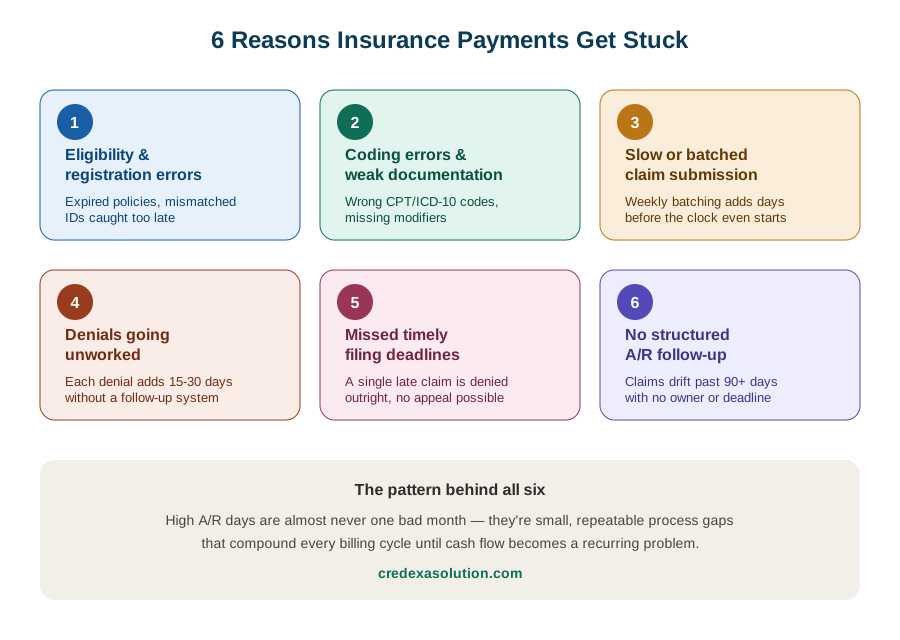
Before you can fix high A/R days, you need to know where the delay is actually happening. In almost every practice we’ve reviewed, slow payments trace back to one (or several) of these six root causes.
1. Eligibility and Registration Errors
A huge share of denials trace back to something that happened before the patient even saw the doctor an expired policy, a mismatched date of birth, or an inactive insurance ID. If front-desk staff aren’t verifying eligibility in real time before every visit, you’re setting the claim up to fail before it’s even coded.
2. Coding Errors and Incomplete Documentation
Using the wrong CPT or ICD-10 code, missing a required modifier, or submitting a claim that doesn’t match the documentation in the chart is one of the single biggest drivers of denials and payment delays. Getting this right the first time is so central to fast reimbursement that we’ve written an entire deep-dive on it see our guide on cpt-codes-in-medical-billing-the-complete-2026-guide-for-healthcare-providers for a full breakdown of how to code claims correctly the first time.
3. Slow or Batched Claim Submission
Every day a clean claim sits on someone’s desk before submission is a day added directly to your A/R. Practices that batch claims weekly, rather than submitting daily or every 24–48 hours, are voluntarily adding days to their own collection cycle.
4. Claim Denials Going Unworked
Industry data puts the average initial claim denial rate somewhere between 9% and 12%, and every denied claim adds an estimated 15 to 30 extra days to your A/R cycle just from rework and resubmission (MedXpert Services, 2026). The problem usually isn’t the denial itself it’s what happens (or doesn’t happen) afterward. Claims that sit in a “denied” bucket without a structured appeal workflow quietly convert from recoverable revenue into permanent write-offs. We cover this exact problem, and how to fix it, in our guide to denial-management-process-in-medical-billing-a-complete-2026-guide-to-preventing-tracking-and-overturning-claim-denials.
5. Missed Timely Filing Deadlines
Payers enforce hard cutoffs for when a claim can be submitted. Medicare’s timely filing window, for example, is 12 months from the date of service, while most commercial payers allow anywhere from 90 days to a year (CMS timely filing guidance). Miss that window, even by a day, and the claim is denied outright no appeal, no resubmission, no payment.
6. No Structured A/R Follow-Up
Many practices treat unpaid claims reactively someone calls a payer only when a patient complains or a balance looks unusually large. Without aging buckets (0–30, 31–60, 61–90, 90+ days) and assigned ownership for each bucket, claims drift past the point where they can realistically be collected.
7. Poor Payer-Specific Follow-Up Knowledge
Every payer has different portals, appeal windows, required forms, and escalation paths. Staff who don’t know which payers respond faster to a phone call versus a portal appeal, or which payers routinely lose faxed documentation, waste follow-up time on the wrong channel. Building a simple internal “cheat sheet” per payer preferred contact method, average turnaround time, appeal deadline removes a surprising amount of friction from back-end follow-up.
8. Undertrained or Overloaded Billing Staff
Even the best billing software can’t compensate for staff who haven’t been trained on payer-specific rules, current CPT/ICD-10 updates, or your practice management system’s denial-tracking features. In many small practices, one or two people handle billing alongside front-desk duties, scheduling, and patient calls which means aging claims naturally fall to the bottom of the priority list, not because anyone is careless, but because there simply isn’t enough dedicated time.
The Real Cost of High A/R Days
It’s easy to treat a rising A/R number as an abstract metric on a dashboard, but the impact is very concrete:
- Cash flow strain. Payroll, rent, and vendor payments are due on a fixed schedule; your reimbursements are not. The gap has to be covered by something often a line of credit, which adds interest costs on top of money you’ve already earned.
- Permanent revenue loss. The older a claim gets, the less likely it is to ever be collected. Claims aged past 120 days typically have a fraction of the recovery rate of claims worked within 30 days.
- Distorted decision-making. Practices with strong revenue but poor cash collection often delay hiring, equipment purchases, or expansion because the money “on paper” isn’t actually available.
- Administrative overload. Staff spend disproportionate time chasing old claims instead of processing new ones, which slows the entire billing cycle down further a compounding problem.
Step-by-Step: How to Reduce A/R Days and Get Paid Faster
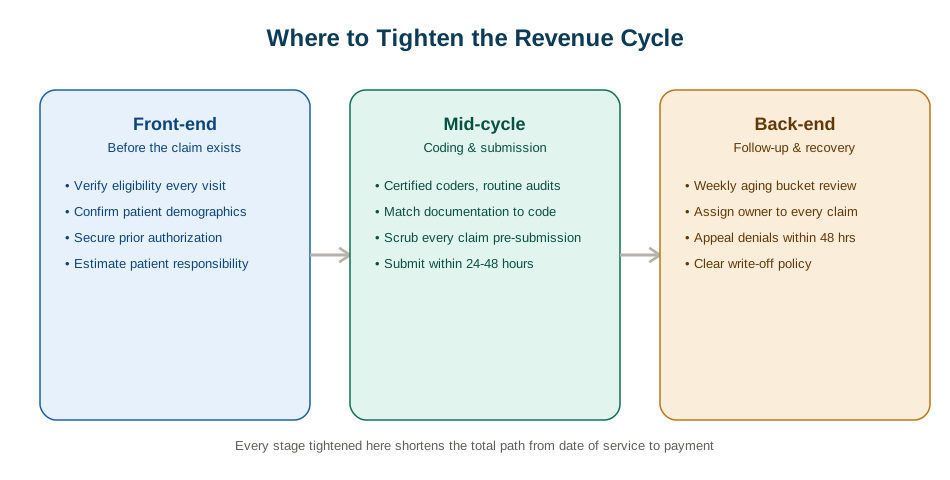
Reducing A/R days isn’t about one big fix it’s about tightening every stage of the revenue cycle so fewer claims go wrong in the first place, and the ones that do get resolved fast. Here’s the system broken down by stage.
Front-End: Stop Problems Before the Claim Is Even Created
- Verify eligibility before every visit, not just new patients. Insurance status can change monthly. Real-time eligibility checks catch inactive coverage, changed plans, and coordination-of-benefits issues before they become denials.
- Collect complete, accurate patient demographic and insurance data. A single transposed digit in a policy number can bounce an otherwise perfect claim.
- Confirm prior authorization requirements up front. Many 2026 denial spikes trace directly back to Medicare Advantage prior authorization backlogs and pended claims awaiting medical review (A3 Medical Billing, 2026). Knowing which procedures require pre-approval and getting it before the appointment avoids an entirely preventable delay.
Mid-Cycle: Get the Coding and Claim Right the First Time
- Use certified coders and run routine coding audits. Accuracy here is the single biggest lever for what’s called your “clean claim rate” the percentage of claims that get paid on the first submission with no rework needed.
- Match documentation to the code billed. Claims are frequently denied not because the code was wrong, but because the chart note doesn’t clearly support the level of service billed.
- Scrub every claim before submission. Automated claim scrubbing software checks for missing modifiers, mismatched codes, and formatting errors that would otherwise bounce the claim back.
- Submit claims within 24–48 hours of the visit. This single habit change, on its own, can meaningfully shrink your A/R cycle simply because the clock starts sooner.
Back-End: Turn Denials and Aging Claims Into Collected Revenue
- Segment your A/R into aging buckets (0–30, 31–60, 61–90, 90+ days) and review them weekly, not monthly. Weekly review catches problems while they’re still recoverable.
- Assign clear ownership. Every aged claim should have a named person responsible for working it, with a deadline for the next action.
- Analyze denials by pattern, not case-by-case. If the same denial reason keeps showing up from the same payer, that’s a process fix, not a one-off appeal.
- Appeal promptly and track outcomes. A denial isn’t the end of the conversation it’s the start of an appeal clock that starts ticking immediately.
- Set a hard write-off and escalation policy. Clear rules on when a claim escalates (or gets written off) stop aging claims from quietly inflating your A/R balance indefinitely.
Technology and Automation
Manual, spreadsheet-driven billing is one of the most common reasons practices can’t scale their collections. Automated eligibility verification, claim scrubbing, denial tracking dashboards, and payment-reminder systems all reduce the number of manual touches a claim needs and every manual touch is a place where a claim can sit untouched for days. Look for a practice management or clearinghouse system that can:
- Flag eligibility issues automatically before check-in, rather than after the claim is denied
- Run built-in claim scrubbing against payer-specific edit rules before submission
- Auto-generate aging reports segmented by payer and by bucket, without manual spreadsheet work
- Send automated text and email payment reminders to patients these are read far more reliably than paper statements, which speeds up the patient-responsibility side of your A/R as well
- Track denial reason codes over time so recurring patterns are visible, not buried in individual claim notes
Building an A/R Follow-Up Cadence That Actually Works
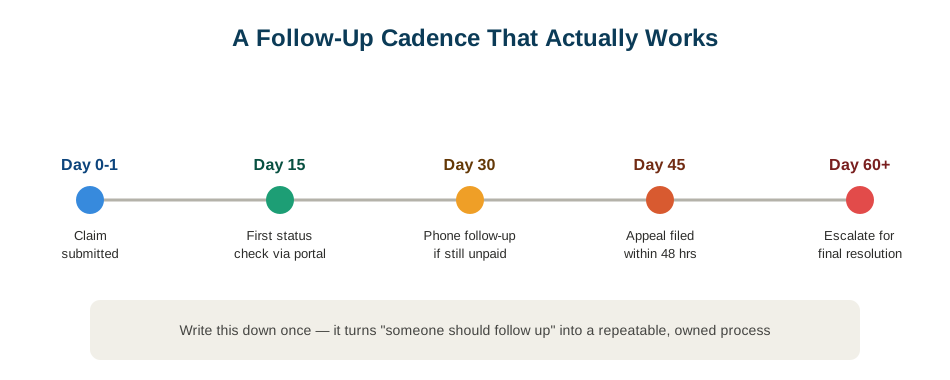
A follow-up policy only works if it’s specific enough that staff can act on it without guessing. A simple, effective cadence looks like this:
- Day 0–1: Claim submitted electronically, confirmation of receipt logged.
- Day 15: If no payer response, first status check via portal or clearinghouse.
- Day 30: If still unpaid or pending, phone follow-up with the payer; document the representative’s name and reference number.
- Day 45: If denied, appeal is filed within 48 hours of the denial notice don’t wait for a “batch” of denials to accumulate.
- Day 60+: Claim escalates to a supervisor or your RCM partner for a final resolution push before it’s considered for write-off review.
Writing this cadence down even in a single shared document turns “someone should probably follow up on that” into a repeatable process your whole team can execute consistently.
Don’t Forget Patient Responsibility
Insurance isn’t the only side of your A/R. With high-deductible health plans now common, a growing share of what your practice is owed comes directly from patients after the insurance portion is settled. The same discipline applies here: verify estimated patient responsibility before the visit when possible, offer a simple online payment option, and send automated reminders rather than relying on a single paper statement. Practices that treat patient collections as an afterthought often find that their “insurance” A/R days look fine while patient-responsibility balances quietly age past 90 days uncollected.
Common Mistakes That Keep A/R Days High
Even practices that are actively trying to improve collections often fall into a few avoidable traps:
- Reviewing A/R monthly instead of weekly. By the time a monthly report flags a problem, claims have already aged an extra 2–4 weeks unnecessarily.
- Treating every denial the same way. A timely-filing denial, a medical-necessity denial, and a coding denial each require a completely different fix lumping them together in one generic “resubmit and hope” process wastes staff time.
- No dollar-value prioritization. Chasing a $40 claim with the same urgency as a $4,000 claim spreads staff attention too thin. Aging reports should be sorted by dollar amount within each bucket, not just by date.
- Letting write-off decisions happen informally. Without a written policy for when a claim gets escalated versus written off, aged claims tend to linger indefinitely instead of being resolved one way or the other.
- Assuming the clearinghouse will catch everything. Clearinghouse-level scrubbing catches formatting and basic rule violations, but it won’t catch a documentation mismatch or an incorrect level-of-service code that still requires human review.
Consider Outsourcing Your Revenue Cycle Management
Not every practice has the staffing bandwidth to run daily eligibility checks, weekly aging reviews, and a proactive denial-appeal workflow — especially smaller practices where the same one or two staff members handle billing alongside scheduling and patient calls. This is exactly where a dedicated medical billing and RCM partner earns its cost back many times over: by treating A/R follow-up as a full-time discipline instead of an afterthought.
Key Metrics Every Doctor Should Track Monthly
You can’t improve what you don’t measure. At minimum, review these numbers every month:
| Metric | What It Tells You | Healthy Benchmark |
|---|---|---|
| Days in A/R | How long it takes to collect after billing | Under 40 days (top performers: 30–35) |
| Clean Claim Rate | % of claims paid on first submission | 90%+ |
| First-Pass Denial Rate | % of claims denied on initial submission | Under 5–10% |
| Net Collection Rate | What you actually collect vs. what’s truly collectible | 96%+ |
| A/R Over 90 Days | % of receivables aged past 90 days | Under 10–15% |
Tracking these together not in isolation tells you where in the cycle money is getting stuck, rather than just confirming that it is.
How Credexa Solutions Helps Doctors Get Paid Faster
At Credexa Solutions, reducing A/R days and accelerating insurance reimbursement is the core of what we do for medical practices. Rather than treating billing as a back-office task, we run it as an active, monitored process:
- Real-time eligibility verification before every appointment, so claims aren’t built on outdated insurance information.
- Certified coding support and pre-submission claim scrubbing, catching CPT, ICD-10, and modifier errors before they ever reach a payer.
- Daily claim submission, not weekly batching, so your A/R clock starts as early as possible.
- Structured denial management, with every denial categorized, appealed, and tracked to resolution instead of sitting in a queue the same framework we walk through in our denial-management-process-in-medical-billing-a-complete-2026-guide-to-preventing-tracking-and-overturning-claim-denials.
- Weekly A/R aging reviews with clear ownership on every bucket, so claims never quietly age past the point of recovery.
- Transparent monthly reporting on Days in A/R, clean claim rate, denial rate, and net collections so you always know exactly where your revenue cycle stands.
Doctors work with Credexa Solutions because they want to spend their time on patients, not on hold with insurance companies. Our job is to make sure the revenue you’ve already earned actually reaches your practice faster, and with less staff time spent chasing it.
Whether your practice is a solo primary care office or a growing multi-provider clinic, the underlying math is the same: every day shaved off your A/R cycle is cash returned to a business you’ve already done the hard part of treating the patient. We work alongside your existing front-desk and clinical teams rather than replacing them, plugging into the gaps where claims typically stall: eligibility, coding accuracy, submission speed, and denial follow-through.
Frequently Asked Questions
1. What is a good Days in A/R for a medical practice? Most industry benchmarks recommend staying under 40 days, with top-performing practices collecting in 30–35 days or less. Anything consistently above 50 days usually signals a process issue rather than a temporary payer delay.
2. How quickly should claims be submitted after a patient visit? Ideally within 24–48 hours. The sooner a clean claim is submitted, the sooner the collection clock starts and the less likely it is to be affected by timely-filing issues later.
3. What’s the difference between A/R balance and A/R days? A/R balance is the total dollar amount currently owed to your practice. A/R days measures how long, on average, it takes to collect that money. A practice can have a modest A/R balance and still have a serious A/R days problem if collections are slow.
4. How much does a claim denial actually cost in time? Industry data suggests each denied claim adds roughly 15 to 30 additional days to the collection cycle due to rework, resubmission, and payer re-review on top of the staff time spent working the appeal.
5. Should small practices outsource medical billing? It depends on staffing bandwidth. If your team is already stretched across scheduling, patient care coordination, and billing, a dedicated RCM partner can often reduce A/R days faster than adding the same tasks onto existing staff.
6. What’s the fastest way to start reducing A/R days this month? Start with the two levers that have the quickest payoff: (1) verify eligibility before every visit, and (2) review your aging A/R buckets weekly instead of monthly. Both changes require no new technology and typically show measurable results within 60–90 days.
7. Does Medicare have a strict deadline for submitting claims? Yes Medicare’s timely filing limit is 12 months from the date of service. Commercial payers vary, typically between 90 days and one year, so it’s worth confirming the specific deadline for each payer your practice bills.
8. How often should a practice review its A/R aging report? Weekly, at minimum, broken out by aging bucket and by payer. Monthly review alone tends to let claims drift 2–4 extra weeks past the point where they could have been resolved.
9. What’s the difference between a clean claim rate and a denial rate? Clean claim rate measures the percentage of claims that get accepted and paid on the first submission with no errors. Denial rate measures the percentage that are rejected or denied outright. A high clean claim rate and a low denial rate together are the clearest sign of a well-functioning front-end and coding process.
10. Can better technology alone fix high A/R days? Not on its own. Automation reduces manual errors and speeds up routine tasks like eligibility checks and reminders, but it still requires trained staff (in-house or outsourced) to review exceptions, work denials, and make judgment calls on aged claims. Technology and process discipline work together neither replaces the other.
Final Thoughts
High A/R days rarely have a single cause, and they rarely fix themselves. They build up gradually a missed eligibility check here, an unworked denial there until a practice looks up one quarter and realizes cash flow has quietly become a monthly crisis instead of a stable foundation. The encouraging part is that the fix is just as gradual and just as achievable: tighten the front end, get claims out the door faster, work denials on a schedule instead of reactively, and track the right numbers every month.
Whether you handle billing in-house or want a dedicated partner managing the process end-to-end, the goal is the same the care you’ve already delivered should turn into cash in your account as quickly as possible.
Want a free breakdown of where your practice’s A/R is getting stuck? Contact Credexa Solutions for a no-obligation revenue cycle review.